Showing 133–144 of 339 results
Lata: A Life in Music Hardcover
$37.00An ode to the majestic life of the late Lata Mangeshkar, Lata: A Life in Music celebrates art in its totality and tells the life story of India’s most loved vocal artists. The result of Yatindra Mishra’s decade-long dialogue with the great singer, it also explores the lesser-known aspects of the great artist, introducing the readers to Lata Mangeshkar as an intellectual and cultural exponent and providing a rare glimpse into the person behind the revered enigma.
At the confluence of cinema, music and literature, this is the most definitive biography of the voice of the nation that also documents sociocultural changes from the late British era through post-Independent India right up to the twenty-first century. This is the story of the various myths, mysteries, truths and contradictions which make a human an icon and also make an icon incredibly humane. Review
Yatindra Mishra’s questions are strong and leading. They are just as illuminating as the answers. That is the beauty of the book.Gulzar.A unique book, an absolute treasure.Pandit Vishvamohan Bhatt.The singing voice of the iconic singer has had an unprecedented impact on Indian film music, but the voice that we hear in the book, anecdotes, memories and experiences, is equally moving and inspiring.Shubha Mudgal.A wonderful book!One can feel Yatindra Mishra’s passion as an artist in each page.Sooraj Barjatya.A document of the interesting details of Lata Mangeshkar’s life, the book offers glimpses of Hindi film music.BBC.An interesting document of the musical career of the Lata Mangeshkar. We need more such original documents about our major stars.India Today.
About the Author
About the Author
Yatindra Mishra is the author of four collections of poetry and some well-received books on Indian music, cinema and arts in the Hindi language such as Girija, Devpriya, Sur Ki Baradari, Akhtari and Shahernama Faizabad (ed.).
The original Hindi version of this book, Lata: Sur-Gatha, won the 64th National Film Award and the MAMI Award for Best Writing on Cinema (2016-17).
About the Translator
Ira Pande is a writer, columnist, and an accomplished translator. Over the years, she has translated short stories, novellas, memoirs, autobiographies and literary portraits. She was awarded the Crossword and Sahitya Akademi award for her translation of Manohar Shyam Joshi’s novella T’ta Professor in 2010. She has also translated Shivani’s stories and memoir Amader Shantiniketan, as well as Apradhini: Women without Men, a work on jailed women.
Learning To Be Combo Saint Set [ Service with Guru Nanak , Kindness with Mahavira & Peace with Buddha ] Hardcover
$55.00“When the school bell rings, and it’s time for home, can you spare a minute or two? The teacher is tired from her long, busy day, can you say, “I’d like to help you.” The Indian saint, Guru Nanak, believed that God lives in each and everything. He reminds us to remember that each time we serve, we are serving God. He encourages us to make service a part of our daily lives. This board book, Service With Guru Nanak will enable children to explore the many ways in which they can serve friends, family and the environment in their everyday lives. The Series, Learning TO BE is a creative way to introduce your little ones to big values in an engaging manner. Written in simple text and magical verse, this series is perfect to read aloud to toddlers (2-4 year olds) and excellent for beginning readers (4-8 year olds). Look for other titles in this series: Kindness with Mahavira and Peace with Buddha.
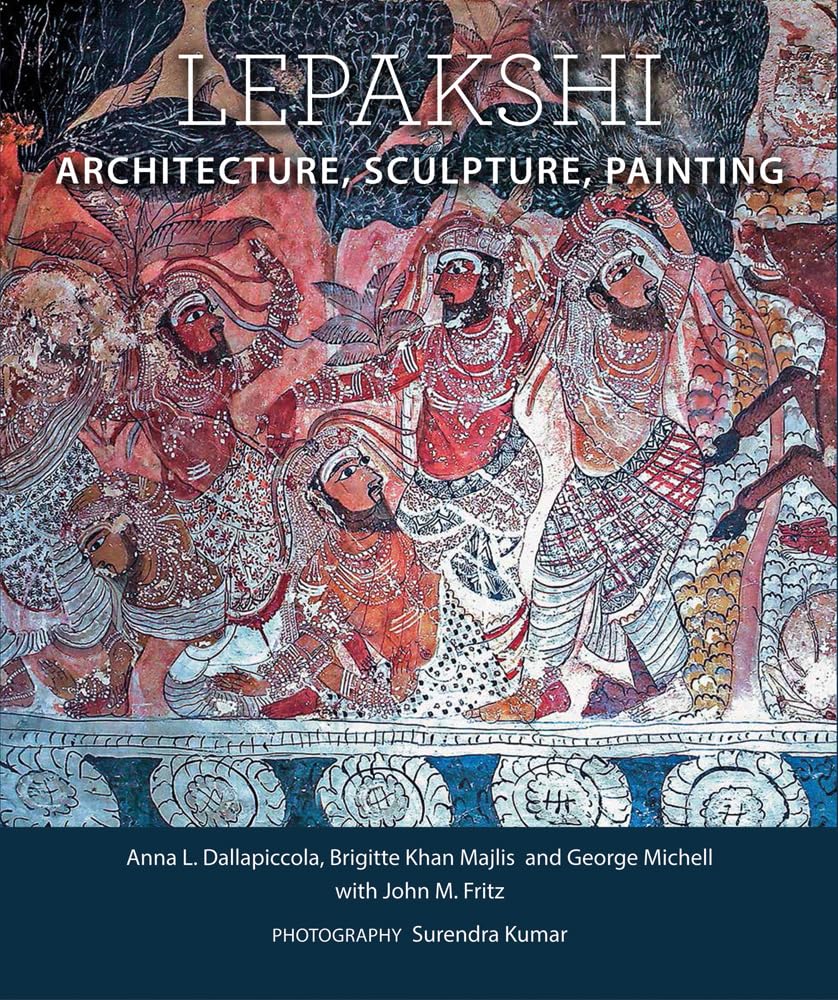
Lepakshi: Architecture, Sculpture, Painting (H.B) Hardcover
$99.99Hidden away in the remote village of lepakshi in the rayalaseema region of Andhra Pradesh, merely a couple of hours drive from Bengali, is one of the most spectacular Vijayanagara temples. Unlike so many other religious monuments of the period that have suffered disfiguring additions or have lost their original carvings and ceiling paintings, that at lepakshi dedicated to virabhadra, a fierce emancipation of Shiva, is miraculously intact. Its architecture, sculptures and paintings showcase the finest artistic achievements in southern India during the first half of the sixteenth century. While the remarkable qualities of lepakshi have long been recognized, particularly its unique series of ceiling paintings, this volume is the first to provide the temple with a comprehensive description. It is authored by three eminent scholars: George Michel, who has focused on Vijayanagara temple architecture; Anna L. Dallapiccola, who has extensively researched the sculptural and painting traditions of southern India; and Brigitte Khan majlis, an expert on Indian textile designs and techniques. In addition to newly prepared architectural plans of the monument, the volume is illustrated with more than 250 specially commissioned photographs of the temple’s exterior and interior by Surendra Kumar. Photography: Surendra Kumar.
Lifespan : Why We Age – and Why We Don’t Have To Paperback
$30.00In this paradigm-shifting book from acclaimed Harvard Medical School doctor and one of TIME magazines 100 most influential people on earth, Dr. David Sinclair reveals that everything we think we know about ageing is wrong, and shares the surprising, scientifically-proven methods that can help readers live younger, longer.
For decades, the medical community has looked to a variety of reasons for why we age, and the consensus is that no one dies of old age; they die of age-related diseases. That’s because ageing is not a disease it is inevitable.
But what if everything you think you know about ageing is wrong?
What if ageing is a disease? And that disease is curable.
In THE EVOLUTION OF AGEING, Dr. David Sinclair, one of the worlds foremost authorities on genetics and ageing, argues just that. He has dedicated his lifes work to chasing more than a longer lifespan he wants to enable people to live longer, healthier, and disease-free well into our hundreds. In this book, he reveals a bold new theory of ageing, one that pinpoints a root cause of ageing that lies in an ancient genetic survival circuit. This genetic trick a circuit designed to halt reproduction in order to repair damage to the genome has enabled earths early microcosms to survive and evolve into more advanced organisms. But this same survival circuit is the reason we age: as genetic damage accumulates over our lifespans from UV rays, environmental toxins, and unhealthy diets, our genome is overwhelmed, causing gray hair, wrinkles, achy joints, heart issues, dementia, and, ultimately, death.
But genes arent our destiny; we have more control over them than weve been taught to believe. We cant change our DNA, but we can harness the power of the epigenome to realise the true potential of our genes. Drawing on his cutting-edge findings at the forefront of medical research, Dr. Sinclair will provide a scientifically-proven roadmap to reverse the genetic clock by activating our vitality genes, so we can live younger longer. Readers will discover how a few simple lifestyle changes like intermittent fasting, avoiding too much animal protein, limiting sugar, avoiding x-rays, exercising with the right intensity, and even trying cold therapy can activate our vitality genes. Dr. Sinclair ends the book with a look to the near future, exploring what the world might look like and what will need to change when we are all living well to 120 or more.
Dr. Sinclair takes what we have long accepted as the limits of human potential and mortality and turns them into choices. LIFESPAN is destined to be the biggest book on genes, biology, and longevity of this decade. Review
‘If you ever wondered how we age, if we can slow or even reverse aging, and if we can live a healthy 100 plus years, then David Sinclair’s new book Lifespan, which reads like a detective novel, will guide you through the science and the practical strategies to make your health span equal your lifespan, and make your lifespan long and vibrant.’
– Mark Hyman, MD Director, Cleveland Clinic Center for Functional Medicine and #1 New York Times bestselling author
‘This is the most visionary book about aging I have ever read. Seize the day–and seize this book!’
– Dean Ornish, MD, founder & president, Preventive Medicine Research Institute, and New York Times bestselling author of UnDo It!
“In this insightful and provocative book that asks questions about how we age, and whether humans can overcome decay and degeneration, Sinclair grapples with some of the most fundamental questions around the science of aging. The result is an elegant and exciting book that deserves to be read broadly and deeply.” Author: Siddhartha Mukherjee, Pulitzer Prize–winning and #1 New York Times bestselling author
“There are few books that have ever made me think about science in a fundamentally new way. David Sinclair’s book did that for me on aging. This is a book that anyone who ages must read.” Author: Leroy Hood, PhD, professor at the California Institute of Technology, inventor, entrepreneur, member of all three US National Academies, and co-author of Code of Codes
About the Author
David Sinclair, PhD is a Professor of Genetics at Harvard Medical School, the Founding Director of Paul F Glenn Labs for Ageing Research, Co-Chief editor of the Journal of Ageing and Con-joint Professor, University of New South Wales, Medicine. He has received more than 25 awards for his medical research and in 2014 he was named by TIME magazine as ‘one of the 100 most influential people in the world’. Born and educated in Australia, he now resides in New York City.
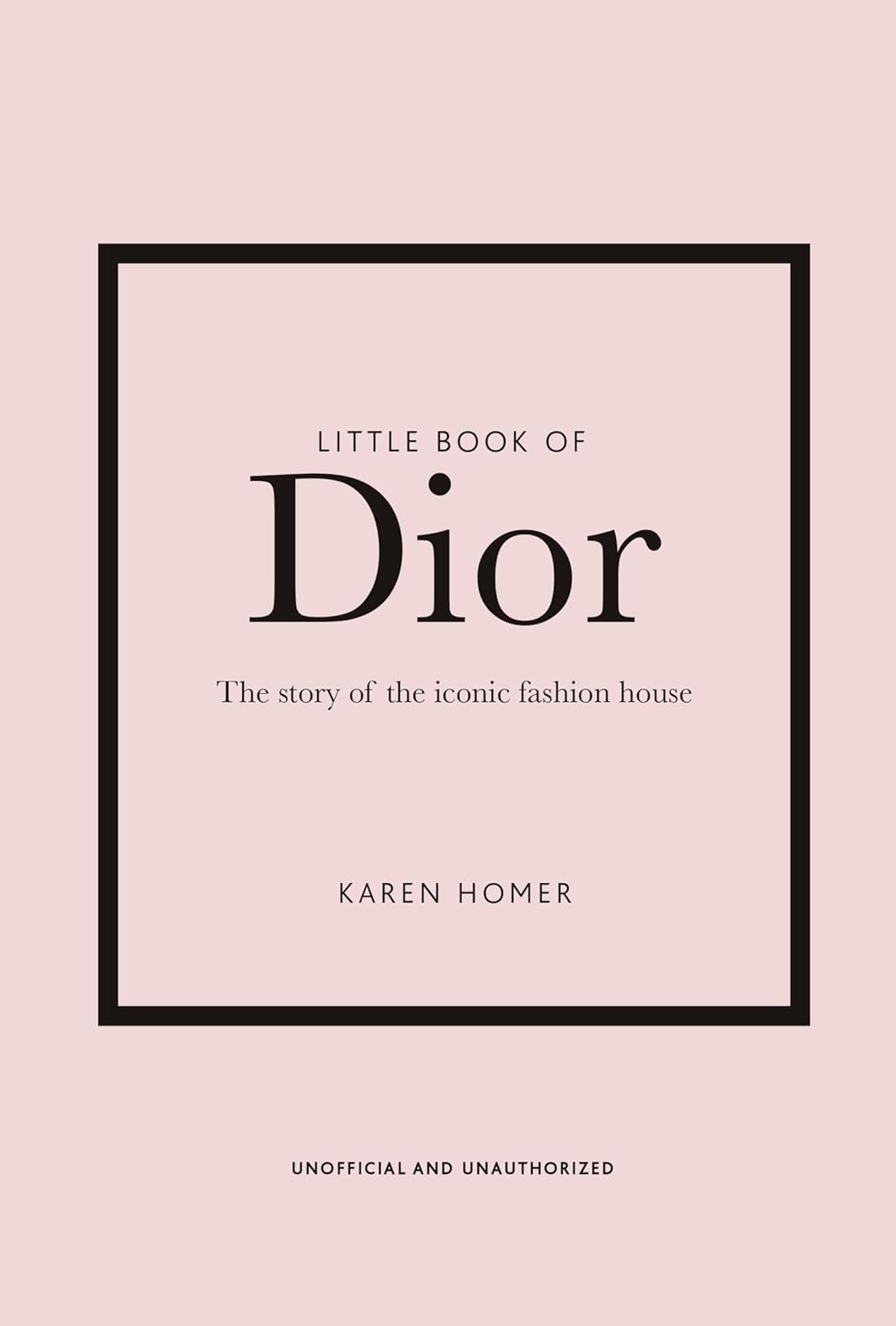
Little Book of Dior: The Story of the Iconic Fashion House: 5 (Little Books of Fashion) Hardcover
$40.00Little Book Of Dior Is The Pocket-Sized And Beautifully Illustrated Story Of 70 Years Of Opulent Fashion. Christian Dior’S Spectacular Rise To The Upper Echelons Of The Parisian Fashion World Is One Of The Most Compelling Stories Of Twentieth-Century Fashion. Dior’S Debut Collection In 1947 Invented The New Look Silhouette And Revolutionized The Way Women Dressed, Shopped And Saw Themselves. Recounting Christian Dior’S Early Life, The Brand’S Inception, The Triumphs Of The Couture Collections On The Catwalk And The Red Carpet, And The Fashion House’S Evolution Under Christian Dior’S Creative Direction Successors – Yves Saint Laurent, Marc Bohan, Gianfranco Ferré, John Galliano, Bill Gaytten, Raf Simons And Maria Grazia Chiuri – Little Book Of Dior Is A Stylish Gift For Any Lover Of Fashion.
Little Book of Dior: The Story of the Iconic Fashion House: 5 (Little Books of Fashion) Hardcover
$40.00Little Book Of Dior Is The Pocket-Sized And Beautifully Illustrated Story Of 70 Years Of Opulent Fashion. Christian Dior’S Spectacular Rise To The Upper Echelons Of The Parisian Fashion World Is One Of The Most Compelling Stories Of Twentieth-Century Fashion. Dior’S Debut Collection In 1947 Invented The New Look Silhouette And Revolutionized The Way Women Dressed, Shopped And Saw Themselves. Recounting Christian Dior’S Early Life, The Brand’S Inception, The Triumphs Of The Couture Collections On The Catwalk And The Red Carpet, And The Fashion House’S Evolution Under Christian Dior’S Creative Direction Successors – Yves Saint Laurent, Marc Bohan, Gianfranco Ferré, John Galliano, Bill Gaytten, Raf Simons And Maria Grazia Chiuri – Little Book Of Dior Is A Stylish Gift For Any Lover Of Fashion.
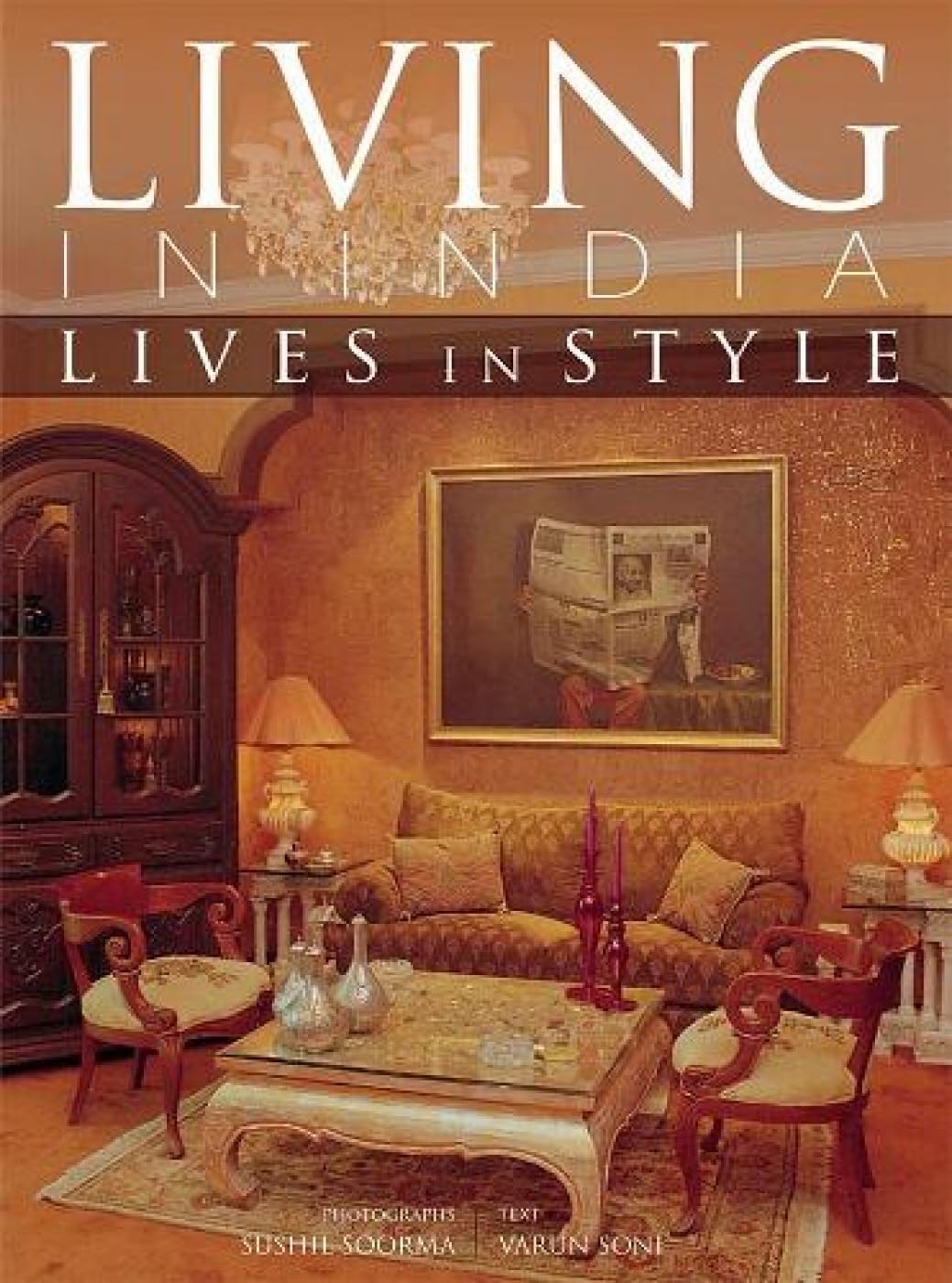
Living in India: Lives in Style Paperback
$35.00With India making great strides in the field of Information Technology and the West outsourcing its work to our talented workforce, it is time that we presented before the world a new, modern and vibrant India – an India that has beautifully integrated its own heritage with the best of the world. ‘Living in India’ is an insight into how a modern, chic India lives – a splendorous living that evokes envy, sers aspirations and showeases to the world elegant and sophisticated living in India.. The 47 homes hailing from all across the country – Delhi, Mumbai, Bangalore and Kolkata to Panaji, Ahmedabad, Surat, Hyderabad, Thiruvananthapuram and even Salem in Tamil Nadu, bring to life the country’s stylish living styles. Each of these homes makes a statement – a statement of class, luxury, distinction and panache. The homes featured in the book belong to a cross-section of people – industrialists, interior designers, architects, artists, even jewellers – each with a distinct flavour. Carefully handpicked and brilliantly photographed, ‘Living in India’ gives a pan-Indian glimpse of the distinct style of interiors representing the best that is prevalent in the world today – the cosmopolitan features, artefacts, furniture and other interior accessories. A major highlight of the book is the written world. The book is not a technical analysis on architecture or interiors but a peek into the Indian living trends, a ‘walk-through’ that leads you by hand into a different class of homes in India.
In the 50-odd homes featured in this book is apparent a new, modern and vibrant India. Hailing from all across the country, these homes belong to a cross-section of people and every home has a different story to tell. Contrary to what people might expect, the book is not a technical know-how giving you a glimpse into the world of interior design, but a peek into the Indian living trends.
Lotus Materia Medica – 1,400 Homeopathic and Herbal Remedies Hardcover
$47.00One of the best books to consult in modern homeopathic practice, this one has it all comprehensive and updated.
Sources- the writings of Allen, Anshutz, Boericke, Burnett, Clarke, Cooper, Hale, Hahnemann, Hering, Julian, Paracelsus, Phatak, and Radamacher, from which the remedy monographs were compiled, formatted, and updated.
Key Features:-
1400 remedies on 2214 pages. The alphabetical schema of the sections in a drug has been followed to keep in line with the repertory style.
It is a more clinical, practical and easy to use reference guide to the vast homeopathic Materia Medica.
Addition of modern terminology, cross references and corrected errors that were found
The homeopathic & herbal literature has been systematically surveyed for reliable additions and updates.
The new name was given to represent the new 200 remedies that were added.
New cross references with more updates and expanded clinical information added to many remedy monographs.
It is hoped that this edition will be helpful in the study and practice of homeopathic and herbal medicines. Product description
About the Author
Dr Murphy is one of the most well known teachers of homeopathy in the world. He has extensive teaching and clinical experience including his years as chairman of the Homeopathic Department at the National College of Naturopathic Medicine in Portland. He has lectured at the National Center for Homeopathy and at colleges in Canada and England. He is now director of the Health Academy of North America.
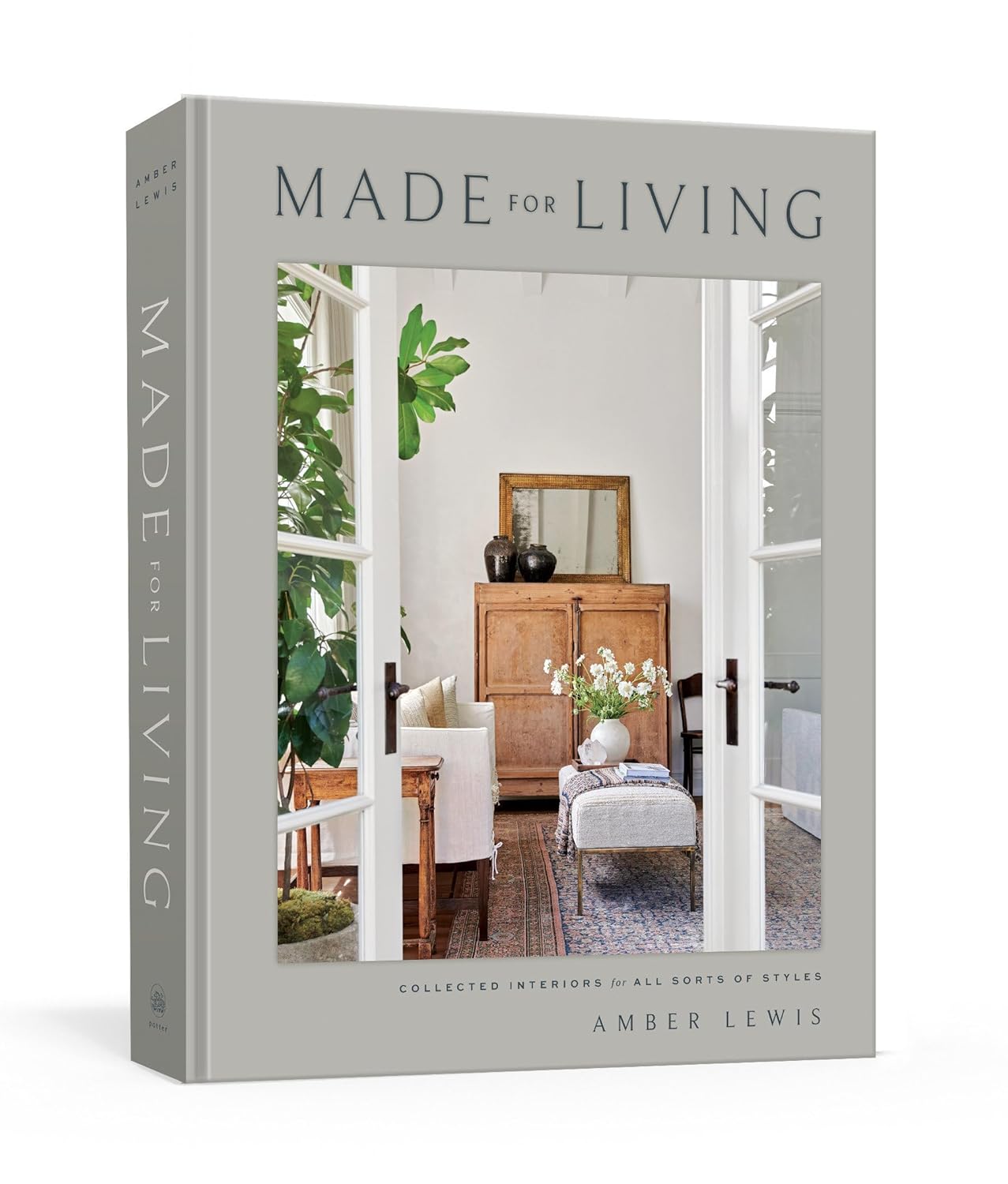
Made for Living: Collected Interiors for All Sorts of Styles Hardcover
$120.00Reading books is a kind of enjoyment. Reading books is a good habit. We bring you a different kinds of books. You can carry this book where ever you want. It is easy to carry. It can be an ideal gift to yourself and to your loved ones. Care instruction keep away from fire. Product description
Review
“Made for Living invites you into dreamy homes that are light, bright, and–key these days–comfortable.”–Martha Stewart Living
“You’ll immediately want to buy this new book of [Amber Lewis’s] signature laid-back interiors for yourself and everyone you know.”–The Zoe Report
“Made for Living unpacks Lewis’s process for those longing to make the look their own.”–Magazine C
About the Author
Interior designer Amber Lewis is the principal and founder of Amber Interiors, a full-service firm that provides designs for everything from large-scale residences to extensive commercial projects. Amber and her team work with architects and contractors to bring to life the distinct visions seen in her work, on her blog, and in her retail shop. Amber lives with her husband and daughter in Calabasas, California.
Excerpt. © Reprinted by permission. All rights reserved.
How do I get your look?
As an interior designer and a lifestyle blogger, I’m asked a lot of questions, and how to translate my style is the one I get asked most. By now, “my look” has become distinct enough that I like to think if you viewed a police lineup of five different homes you’d instantly identify the one I designed. That said, you might not be able to easily sum it up in a few words. Even I struggle with that, because my look isn’t about one thing or the other but rather it’s a specific mix that I’ve spent years developing.
I don’t believe in being monogamous to one design vibe. If you’re looking for a rule book and guide to the “right” way to design a home, Made for Living isn’t it. But if you want to develop a personal approach to interior style that feels as if it grew up out of the ground, rather than bought or prescribed—well, then, you’ve come to the right place. Get ready for spaces that feel both fresh and current but also layered and approachable, homes with finishes that are tactile and rooted in nature, and furniture that effortlessly mixes flea market finds and sleeker shapes in a blend that feels like it will last forever. My kind of elusive, laid-back California cool can be had anywhere—whether you live in a Manhattan apartment or in the middle of suburbia.
You can take the title of this book literally: Everything in these pages is really made for living. In the rooms I design, the sofas are matched with beautiful ottomans upholstered in tactile fabrics that, yes, you can actually put your feet up on (or, in my case, Converse). In my own kitchen, I used one of my favorite materials: beautiful, variegated Moroccan glazed terra-cotta tiles. They’re full of nicks and dings; no two pieces are alike. And that’s why I love them. “Perfect” is not my goal.
Livability is my true north. I don’t want you to worry about constantly fluffing your pillows. I gravitate toward things that look better with time, pieces that feel like they have stories of their own. I hoard vintage finds because I love a true patina that can’t be re-created in a factory. And the materials I use time and again—linens and leathers, brass fixtures, honed marble, white oak flooring—they all change over time. The way your sofa looks on the day it gets delivered is not the way it will look in a few years. Not only is that okay, that’s a good thing. That’s how you achieve more than a re-creation of what you’ve already seen, or what somebody else has. You can do this, too—I promise.
To those who ask me how to get my look, Made for Living is for you. Full of tips and tricks and know-how, the book breaks down the building blocks of my signature style and delves into my design thought process and the “rules” I’ve developed along the way (which is often by breaking tired, old-school conventions). More important, my goal is to inspire you to use my favorite elements to create a look that feels distinctly yours—and to show you how to apply them in your space, making it feel unique to you.
In every interior I design, I see different aspects of my own life coming together to form an aesthetic. This began when I was ten years old, the age when a person begins to become aware of their “happy place” in the world. I found mine when my family moved to Malibu, California. Now, I was no spoiled rich kid. Ours was not the stereotypical Malibu of cheesy TV shows. We didn’t drive fancy cars or live in a crazy mansion. On the contrary, my parents were California hippies before that was anointed “California chic,” and our version of Malibu was a wonderfully intimate, low-key seaside community—one you rarely hear about these days.
My mother was a stay-at-home mom, always cooking or crafting, organizing our schedules, and keeping us busy learning and creating, pushing us to draw or play outside instead of plopping us in front of screens. My dad is a contractor who prides himself on “putting on his bags” and getting to work—his “bags” being the battered leather tool belt he wore with trashed skate shoes and shorts, no matter the weather. Even though he owns his business, he loves the feeling of tools in his hands, actually doing the work. Manual labor was never beneath him, and that tireless work ethic—and respect for the integrity of craftsmanship—has been ingrained in me.
My brother, sister, and I grew up walking on the beach collecting shells and white, heart-shaped rocks while our dad surfed the waves. But for me, the beach was less about the sand and the shells than it was about the view—I needed an open end. Our house had unobstructed views of the Pacific; from the balcony, you could see the whole coast, from sand to horizon, and the occasional whale surfacing in the distance. Growing up surrounded by the colors and textures of nature, noticing the way the light danced on the water and changed with the seasons, and how this affected my mood—all of this played a huge role in who I am as a person. I felt happiest when I had horizons, a never-ending blue abyss in front of me. I got attached to nature from that perspective. Today, that sense of unobstructed light and air is my foundation.
In the earthy rugs and textiles I source for every project, I see myself in my teens and twenties, beginning to explore the world. Truth: I hated school. I started working at fifteen, and though I stayed in high school till I graduated at seventeen, I had an itch to see more. So the moment I got my driver’s license, at age sixteen, I did what you do when you grow up in LA: I hit the Pacific Coast Highway (a.k.a. the PCH). In California, I’ve always been transfixed by how you can fly an hour in one direction, or drive five hours in another, and find yourself in completely different worlds. I love that I can jump from snowy mountains to forested lakes and rivers to some of the most beautiful beaches on Earth, yet somehow I always know I’m in California. This notion—consistency without uniformity—is the cornerstone of how I approach putting rooms together.
At seventeen, I lit out, traveling all over Europe, desperate to see what lay outside my small, beloved Malibu bubble. At twenty-two, I met my husband, a musician, and with him I toured the world, hitting almost every country in Europe, as well as Japan, and beyond. Everywhere we went, I was collecting mental images. I was fascinated by the local design—whether it was the ancient materials and craftsmanship in a French antiques market or the minimal, streamlined timelessness of Scandinavian design. It all stuck with me.
As you might be gathering by now, design is not something I was taught or learned in school. I am a grade-A dropout, friends. When I was twenty-three and about a year into a well-known interior design program, the universe offered up a mini miracle: a job as a design assistant at a small firm. I’m rarely one to take the sensible, linear path. By the time this opportunity came knocking, I’d already been on a somewhat bumpy and randomly plotted trajectory, working as a personal assistant, a salesperson, a window-display designer, an event planner, a florist. Hell, I’ve even dabbled in creating murals and painted a few houses.
At the time, my design training had just begun in earnest. Leaving school was risky. But I believed that I had a real eye. And the job seemed like a fast track to actually doing the work I loved. So I decided to wing it. Working in interior design without formal training isn’t easy—in fact, it’s something I rarely recommend to up-and-comers. I had to work extra hard, learning on my feet to make up for the formal skills I lacked. But as an interior design assistant, I was a sponge, devouring design magazines and books and studying fabric samples. Even as I sourced items that aligned with my boss’s aesthetic, I was beginning to curate my own, daydreaming about how I’d have designed each house myself.
It was not exactly smooth sailing to get to where I am now. The seed for what is now Amber Interiors was planted the day I got fired from that assistant job. Around the same time, my daughter, Gwyneth, was born, and my husband’s career as a touring musician was coming to an end. We’d just bought our first house, in LA, and I decided to start a blog documenting our home renovation and DIY projects. Soon I had plunged full steam ahead into my own interior design business.
Starting a business is hard. Starting a business when you are also caring for an eighteen-month-old is really hard. Starting a business when you are caring for an eighteen-month-old, experiencing postpartum depression, and have a husband who is transitioning out of the job that provides your family’s monthly income feels so hard you are convinced you will die of stress-induced injuries.
To say that things were crazy? That would be an understatement.
Only now can I see the luck in this series of events. Hardship fueled my fire. It’s what triggered the course of my life, the kick in the pants I needed to turn what could have been a sob story into a life I’m proud of and feel compelled to share with others daily. If you’d told me ten years ago that what started as a modest blog would mushroom into a multifaceted business that now includes a thriving design firm and retail stores, I’d never have believed you. And if you’d told me that by 2020, I’d be publishing a book about my “signature style,” I would literally have laughed out loud. But I couldn’t be more thrilled to share what I’ve learned with you in these pages.
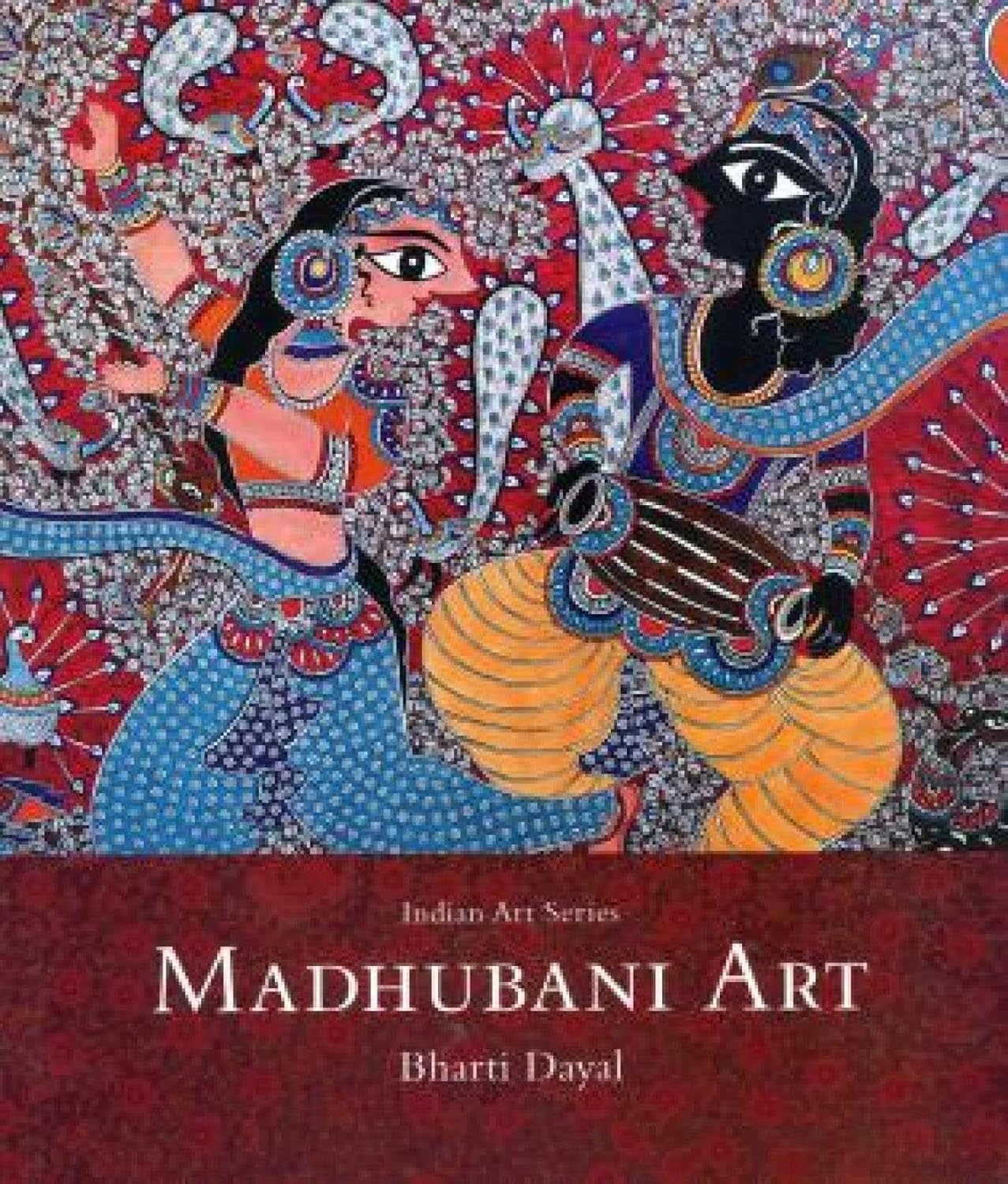
Madhubani Art Bharti Dayal Paperback
$40.00Madhubani art’s origin is believed to go back to the ancient era of the Ramayana, when the town was decorated by inhabitants of the region for the wedding of Lord Rama and Sita with elaborate wall paintings and murals. The philosophy of Madhubani art is essentially based on the principle of dualism. The artscape appears inundated with divine deities, the sun and moon, and flora and fauna along with features found in Buddhism, Islamic Sufism, tantric symbols and classical Hinduism.Primarily a significant socio-cultural engagement for the womenfolk of Bihar, this art was a welcome break from their daily drudgery. Immersed in the folklore of Mithila, fresh forms and figures are painted and repainted on walls and floors of their homes to mark special occasions. Well-established procedures are followed and techniques are passed on from one generation to the next, keeping the ephemeral art form and ancestral tradition and its lore alive.Madhubani artists today are seen to work more with brushes and acrylic paint rather than natural dyes and pigments. They now also work on paper, cloth, canvas and wood to create art and artifacts, besides painting on walls and floors.Contents: Foreword by H.E.M.S. Puri, Ambassador of India in Belgium; Preface by Martin Gurvich; Imaging the Divine: Artscape of Bharati Dayal by Sushma K Bahl; Krishna; Shiva; Ganesha; Devi; The Mahabharata Nature; Bharati Dayal.
Magic Tree House Boxed Set, Books 1-28 Paperback
$175.00This boxed set is the ultimate gift for Magic Tree House fans and readers just beginning chapter books. The #1 bestselling chapter book series of all time includes updated covers and an easy-to-use numbering system!
When Jack and Annie discover a mysterious tree house filled with books, they never dream that it will take them on exciting adventures around the world and throughout history! The story begins with Dinosaurs Before Dark, when Jack and Annie are whisked back to the prehistoric past. With a total of twenty-eight adventures, kids will never get tired of traveling the world and completing missions with their new friends Jack and Annie.
Books in this set include:
-Dinosaurs Before Dark (#1)
-The Knight at Dawn (#2)
-Mummies in the Morning (#3)
-Pirates Past Noon (#4)
-Night of the Ninjas (#5)
-Afternoon on the Amazon (#6)
-Sunset of the Sabertooth (#7)
-Midnight on the Moon (#8)
-Dolphins at Daybreak (#9)
-Ghost Town at Sundown (#10)
-Lions at Lunchtime (#11)
-Polar Bears Past Bedtime (#12)
-Vacation Under the Volcano (#13)
-Day of the Dragon King (#14)
-Viking Ships at Sunrise (#15)
-Hour of the Olympics (#16)
-Tonight on the Titanic (#17)
-Buffalo Before Breakfast (#18)
-Tigers at Twilight (#19)
-Dingoes at Dinnertime (#20)
-Civil War on Sunday (#21)
-Revolutionary War on Wednesday (#22)
-Twister on Tuesday (#23)
-Earthquake in the Early Morning (#24)
-Stage Fright on a Summer Night (#25)
-Good Morning, Gorillas (#26)
-Thanksgiving on Thursday (#27)
-High Tide in Hawaii (#28)
Magic Tree House: Adventures with Jack and Annie, perfect for readers who are just beginning chapter books
Merlin Missions: More challenging adventures for the experienced reader
Super Edition: A longer and more dangerous adventure
Fact Trackers: Nonfiction companions to your favorite Magic Tree House adventures
MAGIC TREE HOUSE MERLIN MISSIONS BOX SET Paperback
$185.00Recently rebranded, the first 25 Magic Tree House Merlin Mission paperbacks all in one box are the perfect gift for fans of the Magic Tree House series. Parents, teachers and librarians hail the chapter-book series as a tool to promote reading, as even the most reluctant readers want to know where the magic tree house will take the brother-and-sister team next.
Magic Tree House Merlin Missions are more challenging adventures for the experienced Magic Tree House reader. In each adventure, Merlin the magician sends Jack and Annie on a special mission using the tree house