Filter by price
Product Status
Showing 61–72 of 166 results
Kurma Purana Paperback Bibek Debroy
$32.00To save the world from cosmic annihilation, Lord Vishnu takes on his second avatar, that of the Kurma, or the tortoise. The Kurma Purana is one of the eighteen classic Hindu texts known collectively as the Puranas. The origins of the Kurma Purana can be traced back to 600 to 900 CE, and we encounter Indradyumna, Varaha, Devi, Vyasa, and the divine presence of Shiva in this text as we delve into the deep and nuanced tale of one of the greatest Hindu legends.
The seventh book in the Purana series, this translation of the Kurma Purana by Bibek Debroy is an attempt to bring to readers, the rich and layered history of our myths and classics.
Previous books in the series include the Bhagavata Purana, Brahma Purana, Markandeya Purana, Brahmanda Purana, Vishnu Purana and the Shiva Purana. About the Author
Biography: Bibek Debroy is a renowned economist, scholar and translator. He has worked in universities, research institutes, industry and for the government. He has widely published books, papers and articles on economics. As a translator, he is best known for his magnificent rendition of the Mahabharata in ten volumes as well as the three-volume Valmiki Ramayana-both of which have been published to wide acclaim by Penguin Classics. He is also the author of Sarama and Her Children, which splices his interest in Hinduism with his love for dogs.
Learning To Be Combo Saint Set [ Service with Guru Nanak , Kindness with Mahavira & Peace with Buddha ] Hardcover
$55.00“When the school bell rings, and it’s time for home, can you spare a minute or two? The teacher is tired from her long, busy day, can you say, “I’d like to help you.” The Indian saint, Guru Nanak, believed that God lives in each and everything. He reminds us to remember that each time we serve, we are serving God. He encourages us to make service a part of our daily lives. This board book, Service With Guru Nanak will enable children to explore the many ways in which they can serve friends, family and the environment in their everyday lives. The Series, Learning TO BE is a creative way to introduce your little ones to big values in an engaging manner. Written in simple text and magical verse, this series is perfect to read aloud to toddlers (2-4 year olds) and excellent for beginning readers (4-8 year olds). Look for other titles in this series: Kindness with Mahavira and Peace with Buddha.
Leo Messi: Volume 108 (Little People, BIG DREAMS) Hardcover
In this book from the highly acclaimed Little People, BIG DREAMS series, discover the incredible life of Leo Messi, one of the world’s most skilled and celebrated footballers.
As a child, Leo developed his passion for football playing games with his brothers and cousins in the streets of Rosario, Argentina. He later honed his skills on the pitch as part of the local youth team, Newell’s Old Boys – who famously won every tournament whilst Leo was with them. But life wasn’t without its challenges. Aged 9, he was diagnosed with Growth Hormone Deficiency, which meant he had to inject himself with hormones from the doctor every day to help him grow. But nothing was going to stop Leo from following his dreams. He debuted with FC Barcelona in 2004 and across the next 17 years scored 672 goals for the club and helped them to win 35 trophies. Leo has also received seven Golden Ball awards, more than any other football player in history, and won 4 trophies with Argentina’s national football team, including the 2022 World Cup, where he captained the team to victory. Messi’s next chapter will be spent training under the Florida sunshine, having joined the US team Inter Miami CF.
Today, he is considered by many to be ‘The Greatest of All Time’ – and is a hero off the pitch, too, as a committed ambassador for UNICEF and founder of his own children’s charity.
This powerful book features stylish and quirky illustrations and extra facts at the back, including a biographical timeline with historical photos and a detailed profile of the footballer’s life.
Little People, BIG DREAMS is a bestselling biography series for kids that explores the lives of outstanding people, from designers and artists to scientists and activists. All of them achieved incredible things, yet each began life as a child with a dream.
This empowering series of books offers inspiring messages to children of all ages, in a range of formats. The board books are told in simple sentences, perfect for reading aloud to babies and toddlers. The hardback and paperback versions present expanded stories for beginning readers. With rewritten text for older children, the treasuries each bring together a multitude of dreamers in a single volume. You can also collect a selection of the books by theme in boxed gift sets. Activity books and a journal provide even more ways to make the lives of these role models accessible to children.
Inspire the next generation of outstanding people who will change the world with Little People, BIG DREAMS!
Lepakshi: Architecture, Sculpture, Painting (H.B) Hardcover
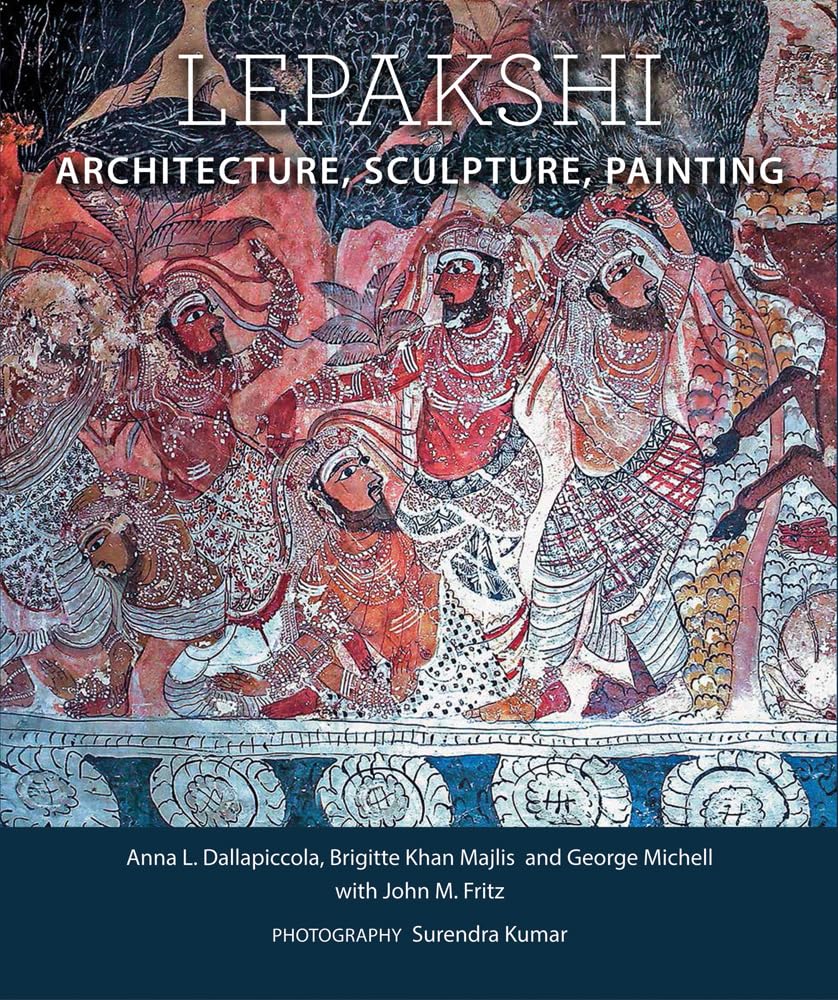
$99.99Hidden away in the remote village of lepakshi in the rayalaseema region of Andhra Pradesh, merely a couple of hours drive from Bengali, is one of the most spectacular Vijayanagara temples. Unlike so many other religious monuments of the period that have suffered disfiguring additions or have lost their original carvings and ceiling paintings, that at lepakshi dedicated to virabhadra, a fierce emancipation of Shiva, is miraculously intact. Its architecture, sculptures and paintings showcase the finest artistic achievements in southern India during the first half of the sixteenth century. While the remarkable qualities of lepakshi have long been recognized, particularly its unique series of ceiling paintings, this volume is the first to provide the temple with a comprehensive description. It is authored by three eminent scholars: George Michel, who has focused on Vijayanagara temple architecture; Anna L. Dallapiccola, who has extensively researched the sculptural and painting traditions of southern India; and Brigitte Khan majlis, an expert on Indian textile designs and techniques. In addition to newly prepared architectural plans of the monument, the volume is illustrated with more than 250 specially commissioned photographs of the temple’s exterior and interior by Surendra Kumar. Photography: Surendra Kumar.
Little Book of Dior: The Story of the Iconic Fashion House: 5 (Little Books of Fashion) Hardcover
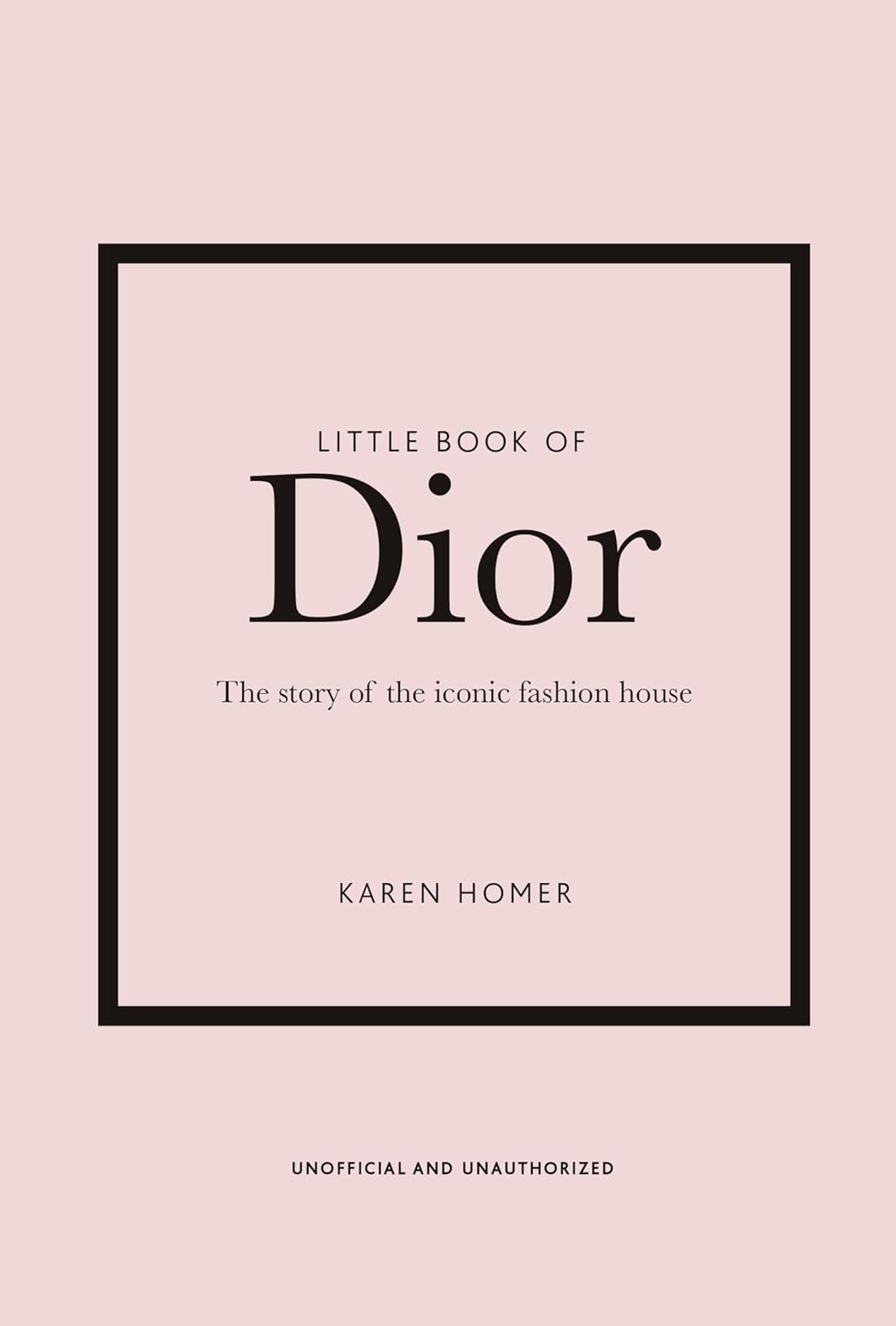
$40.00Little Book Of Dior Is The Pocket-Sized And Beautifully Illustrated Story Of 70 Years Of Opulent Fashion. Christian Dior’S Spectacular Rise To The Upper Echelons Of The Parisian Fashion World Is One Of The Most Compelling Stories Of Twentieth-Century Fashion. Dior’S Debut Collection In 1947 Invented The New Look Silhouette And Revolutionized The Way Women Dressed, Shopped And Saw Themselves. Recounting Christian Dior’S Early Life, The Brand’S Inception, The Triumphs Of The Couture Collections On The Catwalk And The Red Carpet, And The Fashion House’S Evolution Under Christian Dior’S Creative Direction Successors – Yves Saint Laurent, Marc Bohan, Gianfranco Ferré, John Galliano, Bill Gaytten, Raf Simons And Maria Grazia Chiuri – Little Book Of Dior Is A Stylish Gift For Any Lover Of Fashion.
Little Book of Dior: The Story of the Iconic Fashion House: 5 (Little Books of Fashion) Hardcover
$40.00Little Book Of Dior Is The Pocket-Sized And Beautifully Illustrated Story Of 70 Years Of Opulent Fashion. Christian Dior’S Spectacular Rise To The Upper Echelons Of The Parisian Fashion World Is One Of The Most Compelling Stories Of Twentieth-Century Fashion. Dior’S Debut Collection In 1947 Invented The New Look Silhouette And Revolutionized The Way Women Dressed, Shopped And Saw Themselves. Recounting Christian Dior’S Early Life, The Brand’S Inception, The Triumphs Of The Couture Collections On The Catwalk And The Red Carpet, And The Fashion House’S Evolution Under Christian Dior’S Creative Direction Successors – Yves Saint Laurent, Marc Bohan, Gianfranco Ferré, John Galliano, Bill Gaytten, Raf Simons And Maria Grazia Chiuri – Little Book Of Dior Is A Stylish Gift For Any Lover Of Fashion.
Living in India: Lives in Style Paperback
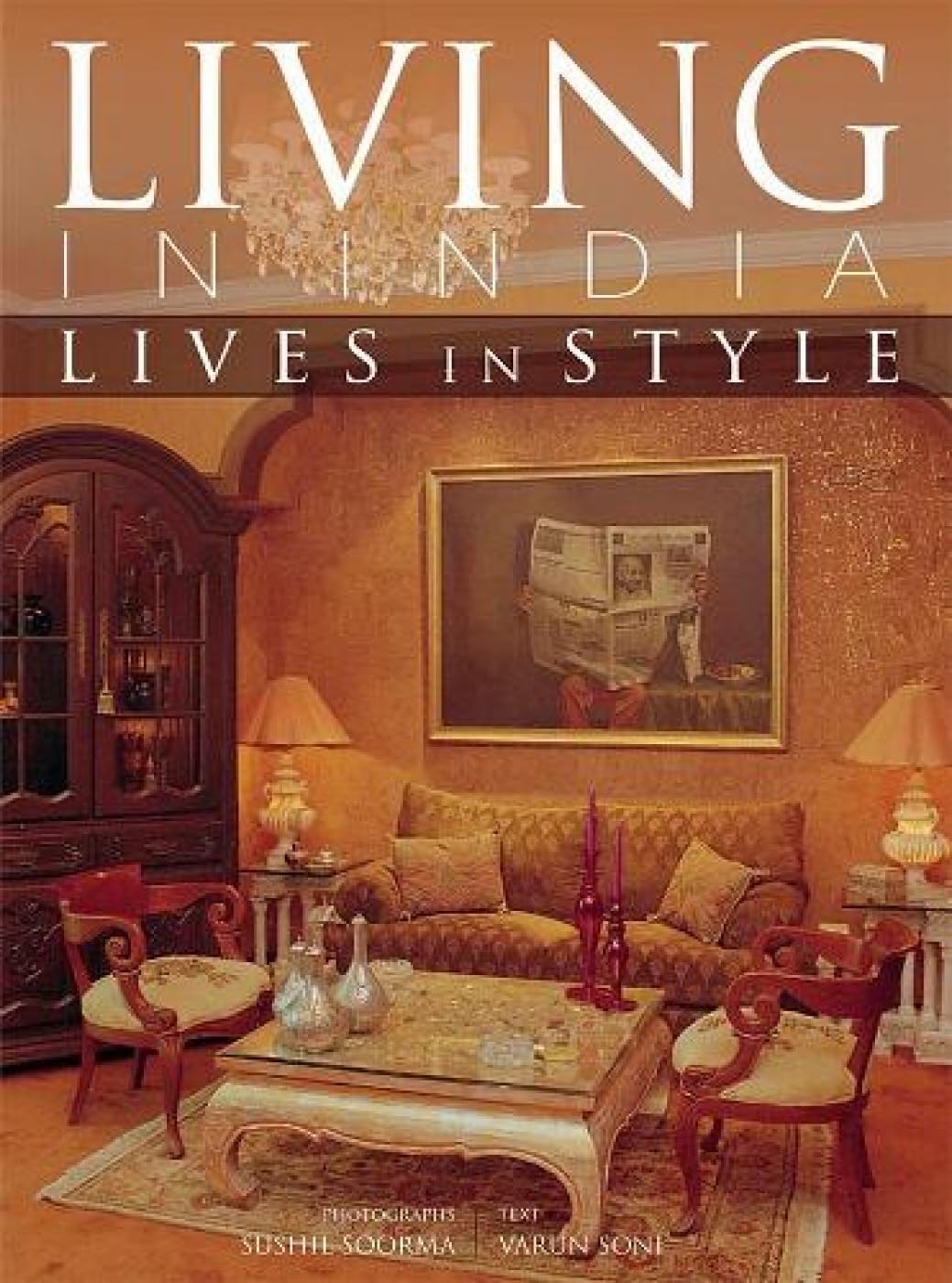
$35.00With India making great strides in the field of Information Technology and the West outsourcing its work to our talented workforce, it is time that we presented before the world a new, modern and vibrant India – an India that has beautifully integrated its own heritage with the best of the world. ‘Living in India’ is an insight into how a modern, chic India lives – a splendorous living that evokes envy, sers aspirations and showeases to the world elegant and sophisticated living in India.. The 47 homes hailing from all across the country – Delhi, Mumbai, Bangalore and Kolkata to Panaji, Ahmedabad, Surat, Hyderabad, Thiruvananthapuram and even Salem in Tamil Nadu, bring to life the country’s stylish living styles. Each of these homes makes a statement – a statement of class, luxury, distinction and panache. The homes featured in the book belong to a cross-section of people – industrialists, interior designers, architects, artists, even jewellers – each with a distinct flavour. Carefully handpicked and brilliantly photographed, ‘Living in India’ gives a pan-Indian glimpse of the distinct style of interiors representing the best that is prevalent in the world today – the cosmopolitan features, artefacts, furniture and other interior accessories. A major highlight of the book is the written world. The book is not a technical analysis on architecture or interiors but a peek into the Indian living trends, a ‘walk-through’ that leads you by hand into a different class of homes in India.
In the 50-odd homes featured in this book is apparent a new, modern and vibrant India. Hailing from all across the country, these homes belong to a cross-section of people and every home has a different story to tell. Contrary to what people might expect, the book is not a technical know-how giving you a glimpse into the world of interior design, but a peek into the Indian living trends.
Lower KG Learning Cap Terms 1, 2 and 3 – Integrated Skill Based Course for Preschool Learners – LKG Books for Kids Set Paperback
$36.00Learning Cap is an integrated series in English, Numbers and General Awareness for the levels Nursery, Lower KG and Upper KG. For each level, this course has 3 integrated books providing well-structured learning material.
Based on the National Curriculum Framework for Foundational Stage (NCF-FS 2022), the series adheres to the guidelines prescribed by Early Childhood Care and Education (ECCE).
Course Content Lower Kg
English – Picture Stories, Writing capital letters in big spaces, short vowel sounds, Patterns and mazes, Vocabulary, Rhyming words
Numbers – Pairing, Sorting, Identification, Quantification and writing numbers till 50; Ordering numbers till 50 orally and in writing; Understanding that zero means nothing; Identifying things visible during day and night
General Awareness – Myself, My Family, My Home, My School, Colours, Seasons, Animals, Food, Plants, Transport, Helpers, Celebration, Water
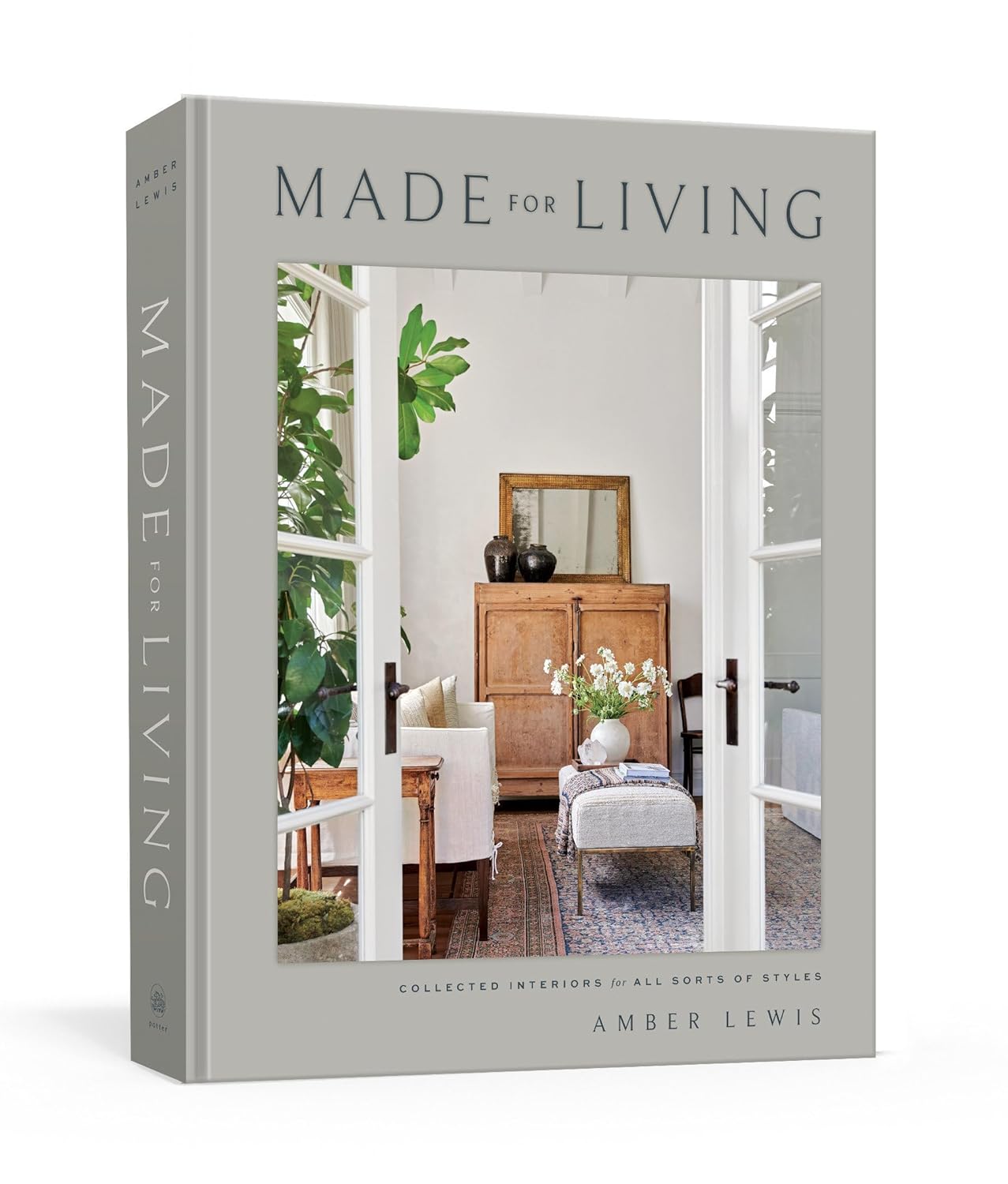
Made for Living: Collected Interiors for All Sorts of Styles Hardcover
$120.00Reading books is a kind of enjoyment. Reading books is a good habit. We bring you a different kinds of books. You can carry this book where ever you want. It is easy to carry. It can be an ideal gift to yourself and to your loved ones. Care instruction keep away from fire. Product description
Review
“Made for Living invites you into dreamy homes that are light, bright, and–key these days–comfortable.”–Martha Stewart Living
“You’ll immediately want to buy this new book of [Amber Lewis’s] signature laid-back interiors for yourself and everyone you know.”–The Zoe Report
“Made for Living unpacks Lewis’s process for those longing to make the look their own.”–Magazine C
About the Author
Interior designer Amber Lewis is the principal and founder of Amber Interiors, a full-service firm that provides designs for everything from large-scale residences to extensive commercial projects. Amber and her team work with architects and contractors to bring to life the distinct visions seen in her work, on her blog, and in her retail shop. Amber lives with her husband and daughter in Calabasas, California.
Excerpt. © Reprinted by permission. All rights reserved.
How do I get your look?
As an interior designer and a lifestyle blogger, I’m asked a lot of questions, and how to translate my style is the one I get asked most. By now, “my look” has become distinct enough that I like to think if you viewed a police lineup of five different homes you’d instantly identify the one I designed. That said, you might not be able to easily sum it up in a few words. Even I struggle with that, because my look isn’t about one thing or the other but rather it’s a specific mix that I’ve spent years developing.
I don’t believe in being monogamous to one design vibe. If you’re looking for a rule book and guide to the “right” way to design a home, Made for Living isn’t it. But if you want to develop a personal approach to interior style that feels as if it grew up out of the ground, rather than bought or prescribed—well, then, you’ve come to the right place. Get ready for spaces that feel both fresh and current but also layered and approachable, homes with finishes that are tactile and rooted in nature, and furniture that effortlessly mixes flea market finds and sleeker shapes in a blend that feels like it will last forever. My kind of elusive, laid-back California cool can be had anywhere—whether you live in a Manhattan apartment or in the middle of suburbia.
You can take the title of this book literally: Everything in these pages is really made for living. In the rooms I design, the sofas are matched with beautiful ottomans upholstered in tactile fabrics that, yes, you can actually put your feet up on (or, in my case, Converse). In my own kitchen, I used one of my favorite materials: beautiful, variegated Moroccan glazed terra-cotta tiles. They’re full of nicks and dings; no two pieces are alike. And that’s why I love them. “Perfect” is not my goal.
Livability is my true north. I don’t want you to worry about constantly fluffing your pillows. I gravitate toward things that look better with time, pieces that feel like they have stories of their own. I hoard vintage finds because I love a true patina that can’t be re-created in a factory. And the materials I use time and again—linens and leathers, brass fixtures, honed marble, white oak flooring—they all change over time. The way your sofa looks on the day it gets delivered is not the way it will look in a few years. Not only is that okay, that’s a good thing. That’s how you achieve more than a re-creation of what you’ve already seen, or what somebody else has. You can do this, too—I promise.
To those who ask me how to get my look, Made for Living is for you. Full of tips and tricks and know-how, the book breaks down the building blocks of my signature style and delves into my design thought process and the “rules” I’ve developed along the way (which is often by breaking tired, old-school conventions). More important, my goal is to inspire you to use my favorite elements to create a look that feels distinctly yours—and to show you how to apply them in your space, making it feel unique to you.
In every interior I design, I see different aspects of my own life coming together to form an aesthetic. This began when I was ten years old, the age when a person begins to become aware of their “happy place” in the world. I found mine when my family moved to Malibu, California. Now, I was no spoiled rich kid. Ours was not the stereotypical Malibu of cheesy TV shows. We didn’t drive fancy cars or live in a crazy mansion. On the contrary, my parents were California hippies before that was anointed “California chic,” and our version of Malibu was a wonderfully intimate, low-key seaside community—one you rarely hear about these days.
My mother was a stay-at-home mom, always cooking or crafting, organizing our schedules, and keeping us busy learning and creating, pushing us to draw or play outside instead of plopping us in front of screens. My dad is a contractor who prides himself on “putting on his bags” and getting to work—his “bags” being the battered leather tool belt he wore with trashed skate shoes and shorts, no matter the weather. Even though he owns his business, he loves the feeling of tools in his hands, actually doing the work. Manual labor was never beneath him, and that tireless work ethic—and respect for the integrity of craftsmanship—has been ingrained in me.
My brother, sister, and I grew up walking on the beach collecting shells and white, heart-shaped rocks while our dad surfed the waves. But for me, the beach was less about the sand and the shells than it was about the view—I needed an open end. Our house had unobstructed views of the Pacific; from the balcony, you could see the whole coast, from sand to horizon, and the occasional whale surfacing in the distance. Growing up surrounded by the colors and textures of nature, noticing the way the light danced on the water and changed with the seasons, and how this affected my mood—all of this played a huge role in who I am as a person. I felt happiest when I had horizons, a never-ending blue abyss in front of me. I got attached to nature from that perspective. Today, that sense of unobstructed light and air is my foundation.
In the earthy rugs and textiles I source for every project, I see myself in my teens and twenties, beginning to explore the world. Truth: I hated school. I started working at fifteen, and though I stayed in high school till I graduated at seventeen, I had an itch to see more. So the moment I got my driver’s license, at age sixteen, I did what you do when you grow up in LA: I hit the Pacific Coast Highway (a.k.a. the PCH). In California, I’ve always been transfixed by how you can fly an hour in one direction, or drive five hours in another, and find yourself in completely different worlds. I love that I can jump from snowy mountains to forested lakes and rivers to some of the most beautiful beaches on Earth, yet somehow I always know I’m in California. This notion—consistency without uniformity—is the cornerstone of how I approach putting rooms together.
At seventeen, I lit out, traveling all over Europe, desperate to see what lay outside my small, beloved Malibu bubble. At twenty-two, I met my husband, a musician, and with him I toured the world, hitting almost every country in Europe, as well as Japan, and beyond. Everywhere we went, I was collecting mental images. I was fascinated by the local design—whether it was the ancient materials and craftsmanship in a French antiques market or the minimal, streamlined timelessness of Scandinavian design. It all stuck with me.
As you might be gathering by now, design is not something I was taught or learned in school. I am a grade-A dropout, friends. When I was twenty-three and about a year into a well-known interior design program, the universe offered up a mini miracle: a job as a design assistant at a small firm. I’m rarely one to take the sensible, linear path. By the time this opportunity came knocking, I’d already been on a somewhat bumpy and randomly plotted trajectory, working as a personal assistant, a salesperson, a window-display designer, an event planner, a florist. Hell, I’ve even dabbled in creating murals and painted a few houses.
At the time, my design training had just begun in earnest. Leaving school was risky. But I believed that I had a real eye. And the job seemed like a fast track to actually doing the work I loved. So I decided to wing it. Working in interior design without formal training isn’t easy—in fact, it’s something I rarely recommend to up-and-comers. I had to work extra hard, learning on my feet to make up for the formal skills I lacked. But as an interior design assistant, I was a sponge, devouring design magazines and books and studying fabric samples. Even as I sourced items that aligned with my boss’s aesthetic, I was beginning to curate my own, daydreaming about how I’d have designed each house myself.
It was not exactly smooth sailing to get to where I am now. The seed for what is now Amber Interiors was planted the day I got fired from that assistant job. Around the same time, my daughter, Gwyneth, was born, and my husband’s career as a touring musician was coming to an end. We’d just bought our first house, in LA, and I decided to start a blog documenting our home renovation and DIY projects. Soon I had plunged full steam ahead into my own interior design business.
Starting a business is hard. Starting a business when you are also caring for an eighteen-month-old is really hard. Starting a business when you are caring for an eighteen-month-old, experiencing postpartum depression, and have a husband who is transitioning out of the job that provides your family’s monthly income feels so hard you are convinced you will die of stress-induced injuries.
To say that things were crazy? That would be an understatement.
Only now can I see the luck in this series of events. Hardship fueled my fire. It’s what triggered the course of my life, the kick in the pants I needed to turn what could have been a sob story into a life I’m proud of and feel compelled to share with others daily. If you’d told me ten years ago that what started as a modest blog would mushroom into a multifaceted business that now includes a thriving design firm and retail stores, I’d never have believed you. And if you’d told me that by 2020, I’d be publishing a book about my “signature style,” I would literally have laughed out loud. But I couldn’t be more thrilled to share what I’ve learned with you in these pages.
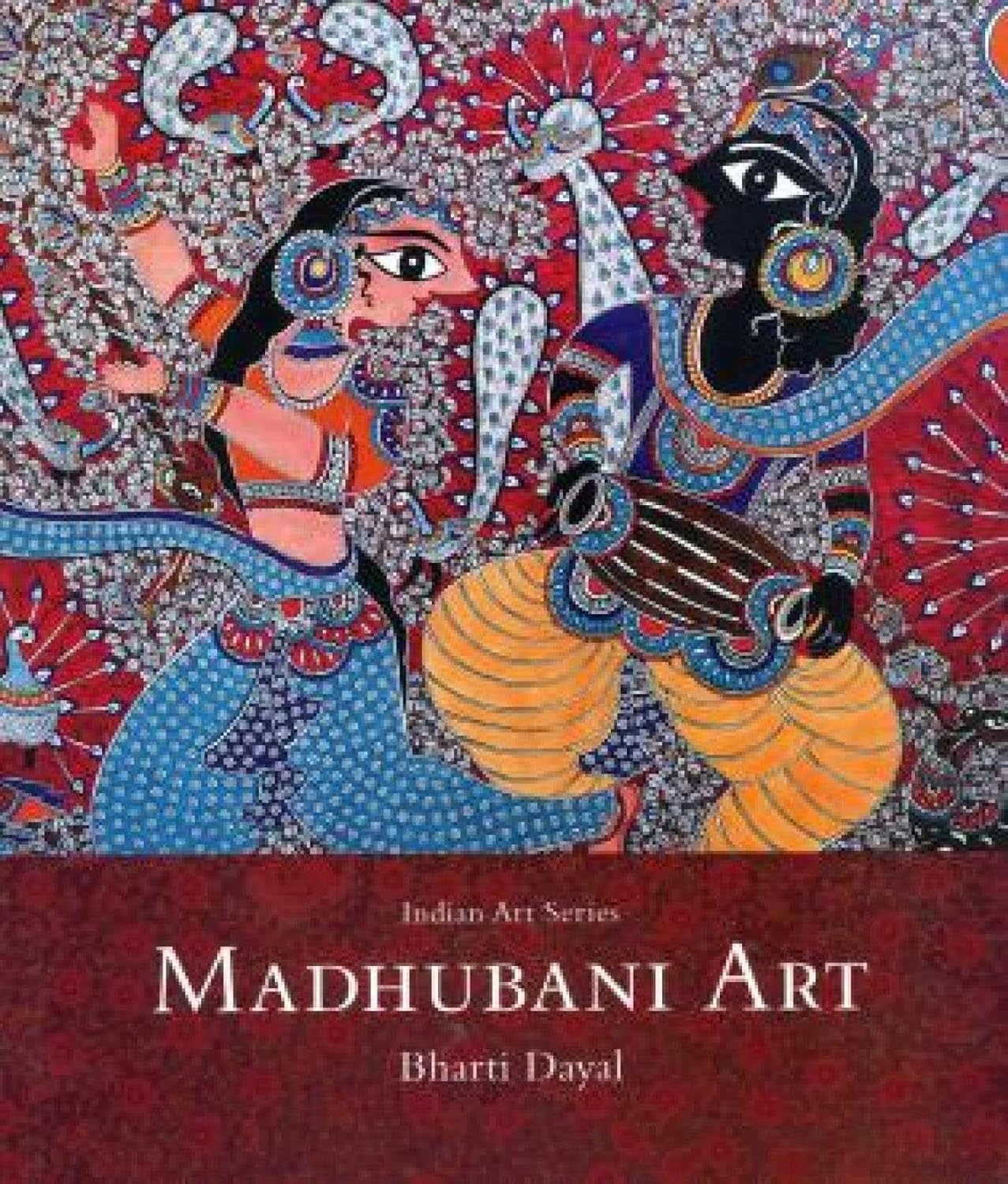
Madhubani Art Bharti Dayal Paperback
$40.00Madhubani art’s origin is believed to go back to the ancient era of the Ramayana, when the town was decorated by inhabitants of the region for the wedding of Lord Rama and Sita with elaborate wall paintings and murals. The philosophy of Madhubani art is essentially based on the principle of dualism. The artscape appears inundated with divine deities, the sun and moon, and flora and fauna along with features found in Buddhism, Islamic Sufism, tantric symbols and classical Hinduism.Primarily a significant socio-cultural engagement for the womenfolk of Bihar, this art was a welcome break from their daily drudgery. Immersed in the folklore of Mithila, fresh forms and figures are painted and repainted on walls and floors of their homes to mark special occasions. Well-established procedures are followed and techniques are passed on from one generation to the next, keeping the ephemeral art form and ancestral tradition and its lore alive.Madhubani artists today are seen to work more with brushes and acrylic paint rather than natural dyes and pigments. They now also work on paper, cloth, canvas and wood to create art and artifacts, besides painting on walls and floors.Contents: Foreword by H.E.M.S. Puri, Ambassador of India in Belgium; Preface by Martin Gurvich; Imaging the Divine: Artscape of Bharati Dayal by Sushma K Bahl; Krishna; Shiva; Ganesha; Devi; The Mahabharata Nature; Bharati Dayal.
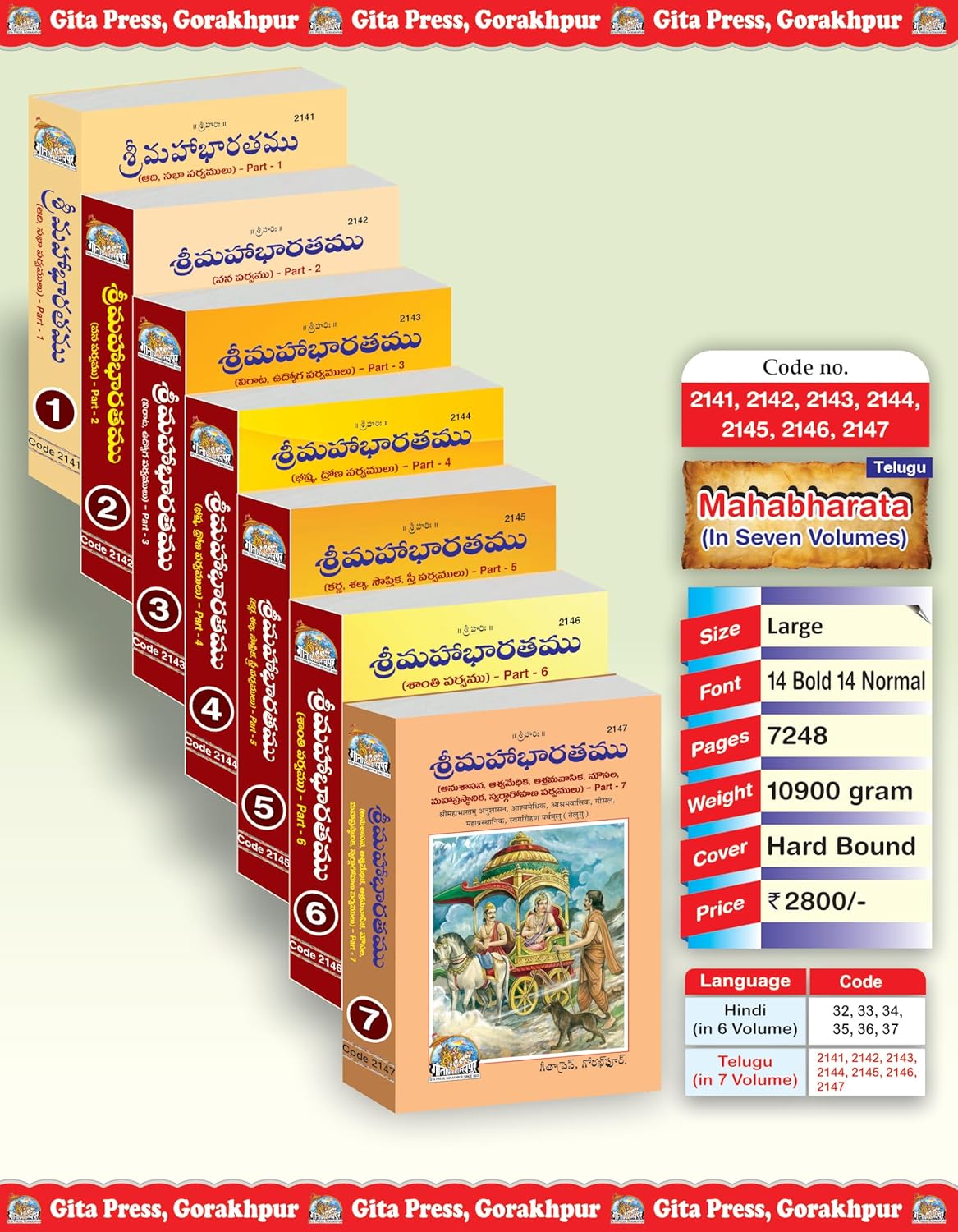
Mahabharatam, in Telugu (Part1,2,3,4,5,6,7) by Gita Press Gorakhpur Hardcover
Mahabharatam, in Telugu (Part1,2,3,4,5,6,7) by Gita Press Gorakhpur
Marrakech Flair Marisa Berenson Hardcover
$279.00It has been said that Marrakech awakens all of the senses. Whether it is seeing the intricate zellige tilework; smelling the various spices sold at the souks; hearing the call to prayer emanate from the nearby mosques; touching the supple leather used to make a pair of babouches (leather sandals); tasting a flavorful tagine, Marrakech never fails to excite. Located just west of the Atlas Mountains, the city has been inhabited by Berber farmers for centuries. It has been dubbed the “Ochre City” because of the proliferation of red sandstone buildings and the red city walls, which now enclose the Medina, home to Jemaa el-Fnaa, one of the busiest squares in Africa.Marrakech overflows with culture and has been inspiring visitors for decades. From Yves Saint Laurent to Talitha Getty, Winston Churchill to Mick Jagger, Marrakech has attracted great icons inspired by its eternal spirit as well as its sweet, beautiful life. Yves Saint Laurent’s intimate relationship to this city lead to the opening of a museum dedicated to his legendary work. The annual Marrakech International Film Festival draws a prominent crowd. Museums abound, exhibiting Moroccan arts, photography, carpets, and the Andalusian design aesthetic that permeates the city’s architecture. La Mamounia hotel, opened in 1923, offers a storied history, which includes hosting guests such as Winston Churchill. Vanessa Branson’s El Fenn is a collection of traditional riads that form a stunning boutique hotel. There are countless ways to be immersed in the culture of Marrakech, but perhaps the best place to start is with a simple glass of mint tea.